

Understanding Your Right to Full Wage Recovery After a Workplace Injury
Key Takeaways: Injured Atlanta workers can often recover lost overtime and bonus pay because Georgia’s workers’ compensation system bases income benefits on your true earnings, not just base pay. Under O.C.G.A. § 34-9-260, your average weekly wage typically equals one-thirteenth of total wages earned during the 13 weeks before your injury, with fallback methods for newer employees. Overtime, production bonuses, and second-job income under the concurrent similar employment doctrine may count when properly documented, while fringe benefits like employer-paid insurance premiums generally do not. Your weekly check equals two-thirds of your average weekly wage, subject to statutory caps, temporary total disability maxes at 800 dollars per week under the 2024 maximum. Benefits generally last up to 400 weeks from the injury date, with exceptions for catastrophic injuries. Careful documentation of pay stubs, overtime records, and bonus statements is critical to maximizing your recovery.
When a workplace injury sidelines you, the money you lose is rarely just your base pay. Many Atlanta workers depend on overtime shifts, production bonuses, or a second job to make ends meet. Georgia’s workers’ compensation system generally bases your benefits on your true earnings, which means overtime and bonus pay you actually earned before the injury can factor into your weekly check. The answer to whether injured Atlanta workers can recover lost overtime and bonus pay is often yes, but depends on how your average weekly wage is calculated and the statutory caps that apply.
If you are an injured worker in Atlanta trying to protect every dollar of your wage replacement, the team at The Law Offices of Darwin F. Johnson is ready to help. Call our office at 404-521-2667 or reach out through our online contact form to get started today.
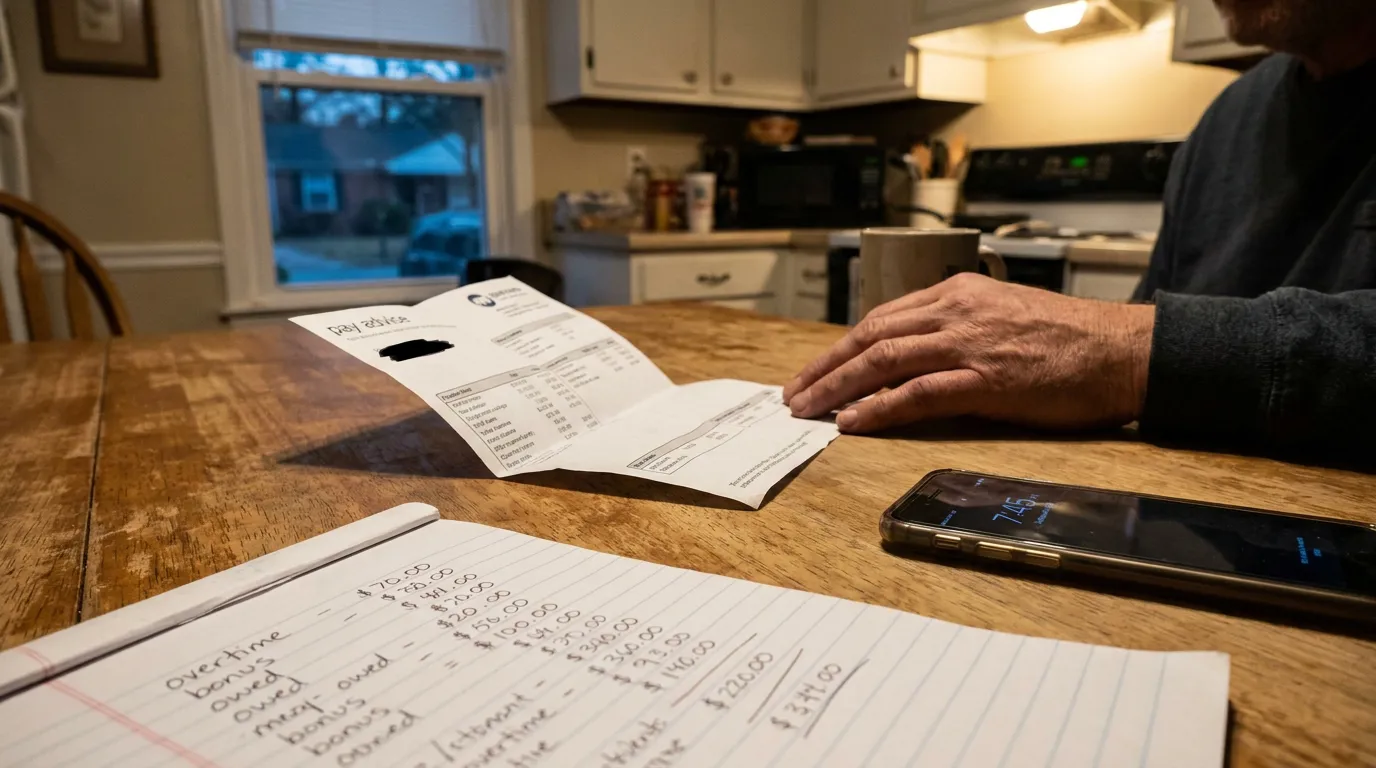
Does Workers Comp Cover Lost Wages in Georgia?
Georgia workers’ compensation replaces a portion of the income you lose while you cannot work. According to the Georgia State Board of Workers’ Compensation, this employer-paid accident insurance program provides medical, rehabilitation, and income benefits. That income benefit category is where lost wages, including overtime and bonuses, come into play.
Does workers comp cover lost wages beyond your hourly base rate? Often, yes. Because Georgia calculates income benefits from your average weekly wage, higher documented earnings during the relevant period mean higher benefits, subject to statutory limits. Understanding the AWW calculation in Georgia matters for anyone recovering from a Georgia workplace injury.
💡 Pro Tip: Keep copies of every pay stub, overtime record, and bonus statement from the months before your injury. These documents are often the most important evidence in maximizing your wage replacement.
How Georgia Calculates Your Average Weekly Wage
The average weekly wage, or AWW, is the foundation for your income benefits. Under O.C.G.A. § 34-9-260, if you worked substantially the whole of the 13 weeks immediately preceding your injury, your average weekly wage generally equals one-thirteenth of the total amount of wages earned during those 13 weeks. Because the statute looks at total wages earned, forms of pay you actually received in that window can be included.
This math directly affects your paycheck. Georgia income benefits generally replace two-thirds of your AWW, subject to statutory maximum and minimum weekly limits. If your average weekly income is 900 dollars, each weekly workers’ comp check would be roughly 600 dollars. Boosting a legitimate AWW through documented overtime and bonus pay can meaningfully change your benefit, up to the applicable cap.
What Happens If You Have Not Worked a Full 13 Weeks
Newer employees are not shut out of fair wage calculations. Under O.C.G.A. § 34-9-260(2)-(3), if you had not been employed for substantially the whole 13 weeks, the wages of a similar employee who did work the full period may be used. If neither method can reasonably be applied, the full-time weekly wage of the injured employee may be used instead.
💡 Pro Tip: If your overtime varies seasonally, note the pattern in writing. Courts and adjusters may consider how representative your 13-week window truly is when a fair calculation is disputed.
Overtime, Bonuses, and Other Earnings That May Count
Georgia courts have recognized that real economic gains beyond base pay can count as wages. Case annotations to O.C.G.A. § 34-9-260 note that a food or meal subsidy was properly included in the average weekly wage as a real economic gain, while fringe benefits such as employer-paid insurance premiums are generally not encompassed within the term average weekly wage. This explains why overtime and bonuses, which represent actual earnings, are treated differently from certain non-wage perks.
A second job may also matter. Under Georgia’s concurrent similar employment doctrine, a worker’s full-time weekly wage has been found to include both full-time wages earned with one employer and part-time wages earned at another.
Here are common earnings categories and how they generally interact with the AWW:
- Overtime pay: Generally counts when earned during the applicable wage period and properly documented.
- Bonuses: May count as wages when they represent real earnings tied to your work, subject to documentation.
- Second-job income: May be included under the concurrent similar employment doctrine when the facts support it.
- Employer-paid insurance premiums: Generally excluded as a fringe benefit rather than a wage.
💡 Pro Tip: Bonuses tied directly to production, attendance, or safety are often easier to document as real earnings than discretionary, one-time gifts. Save the plan documents that describe how a bonus is earned.
Limits, Caps, and Duration of Wage Benefits
Even when overtime and bonus pay increase your AWW, Georgia law places ceilings on the final benefit. Under O.C.G.A. § 34-9-260, the AWW is determined subject to the maximum and minimum limits set in O.C.G.A. §§ 34-9-261 and 34-9-265. For temporary total disability, O.C.G.A. § 34-9-261 requires the employer to pay a weekly benefit equal to two-thirds of the employee’s average weekly wage, but not more than 800 dollars per week nor less than 50 dollars per week for injuries on or after July 1, 2023.
These caps mean higher earners may not recover every lost dollar. The 800 dollar per week maximum affects workers with an average weekly wage of 1,200 dollars or more. Once your two-thirds calculation exceeds the cap, additional overtime or bonus income in your AWW may not translate into a larger check.
| Benefit Feature | General Rule Under Georgia Law |
|---|---|
| Benefit rate | Two-thirds of average weekly wage |
| Temporary total disability max (2024) | 800 dollars per week |
| Minimum weekly benefit | 50 dollars per week, or your AWW if lower |
| Temporary partial disability max | 533 dollars per week |
| Duration | Generally up to 400 weeks from date of injury |
Duration matters as much as the weekly amount. Under O.C.G.A. § 34-9-261, temporary total disability benefits are generally payable for a maximum of 400 weeks from the date of injury in non-catastrophic cases. For catastrophic injuries, payments may continue until there is a change in condition under O.C.G.A. § 34-9-104(a)(1). Temporary partial disability benefits carry a lower weekly maximum of 533 dollars and are generally payable for up to 350 weeks from the date of injury.
Who Qualifies and Common Challenges for Injured Workers
Eligibility for Georgia workers’ compensation generally begins on your first day of work. W-2 employees, whether full-time, part-time, seasonal, or temporary, are generally covered from day one. By contrast, 1099 contractors, freelancers, and gig workers are generally not covered, though worker classification is a fact-specific question that can be disputed.
Documentation is where many wage disputes are won or lost. Because overtime and bonus pay must be documented to be counted in your AWW, missing pay records can shrink your benefit. Insurers may calculate the AWW using base pay alone, so reviewing that number carefully is important. To learn more about protecting your rights after a Georgia workplace injury, our does workers comp cover lost wages lawyer team explains how these claims work.
💡 Pro Tip: Report your injury to your employer promptly and in writing. Georgia generally requires notice within 30 days, and delays can give an insurer a reason to question your Atlanta workers comp claim.
Outcomes depend on the specific facts of your case, and this article is general information rather than individualized legal advice. Find additional resources on wage replacement and related topics on our Georgia workers comp benefits blog.
Frequently Asked Questions
-
Does workers comp cover lost wages from overtime I regularly worked?
Often, yes. Because O.C.G.A. § 34-9-260 bases the average weekly wage on total wages earned during the relevant 13 weeks, documented overtime you actually earned can factor into the figure, subject to statutory caps.
-
Can a bonus be included in my average weekly wage?
It may be, when the bonus represents real earnings. Georgia case annotations recognize that genuine economic gains can count as wages, while certain fringe benefits are excluded. Keeping bonus plan documents helps show the payment was earned.
-
What if I have a second job in Atlanta?
Income from a second job may be included under the concurrent similar employment doctrine. Georgia annotations describe combining full-time wages from one employer with part-time wages from another, depending on your circumstances.
-
Is there a limit on how much I can receive?
Yes. Under O.C.G.A. § 34-9-261, temporary total disability benefits were capped at 800 dollars per week for injuries governed by the 2024 maximum, so higher earners may not fully recover all lost overtime and bonus pay.
-
How long can wage benefits last?
Generally up to 400 weeks from the date of injury. O.C.G.A. § 34-9-261 sets that limit for non-catastrophic temporary total disability, with an exception for catastrophic injuries, where payments may continue subject to a change in condition.
Protecting Every Dollar of Your Wage Recovery
Injured Atlanta workers frequently lose more than base pay, and Georgia law generally allows overtime and bonus earnings to factor into the average weekly wage that drives your benefits. The calculation under O.C.G.A. § 34-9-260 looks at total wages earned in the 13 weeks before injury, fallback methods protect newer employees, and statutory caps under O.C.G.A. §§ 34-9-261 and 34-9-265 limit the final check. Because insurers do not always count everything, careful documentation and a close review of your AWW can make a meaningful difference.
If you believe your workers’ compensation benefits do not reflect your true earnings, The Law Offices of Darwin F. Johnson is ready to review your claim. Call us today at 404-521-2667, send a message through our confidential case review form, or visit our main website to take the next step in protecting your recovery.