

Understanding Your First Workers’ Comp Payment in Georgia
Key Takeaways: In Georgia, an injured Atlanta worker’s first income-benefit check is generally due by the twenty-first day after the employer learns of the injury. A seven-day waiting period means wage-loss benefits don’t start on the first missed day, though that week is paid retroactively if the absence exceeds 21 consecutive days. Eligible workers typically receive two-thirds of their average weekly wage, capped at $800.00 per week for accidents on or after July 1, 2023. Coverage begins on your first day of employment for businesses with three or more workers. Late payments can trigger 15 percent or 20 percent penalties, while disputed claims may be delayed by a notice to controvert.
If you were hurt on the job in Atlanta, the most pressing question is often about your paycheck. In Georgia, the insurer generally must issue the first income-benefit payment by the twenty-first day after your employer learns of the injury. That timeline gives injured workers a clear expectation for when their first check should arrive, though a mandatory waiting period affects the exact amount and start date.
📞 If an insurer is delaying your benefits, The Law Offices of Darwin F. Johnson can help you understand your options. Call 404-521-2667 or reach out through our contact page to discuss your work injury today.
The 21-Day Rule That Governs Your First Check
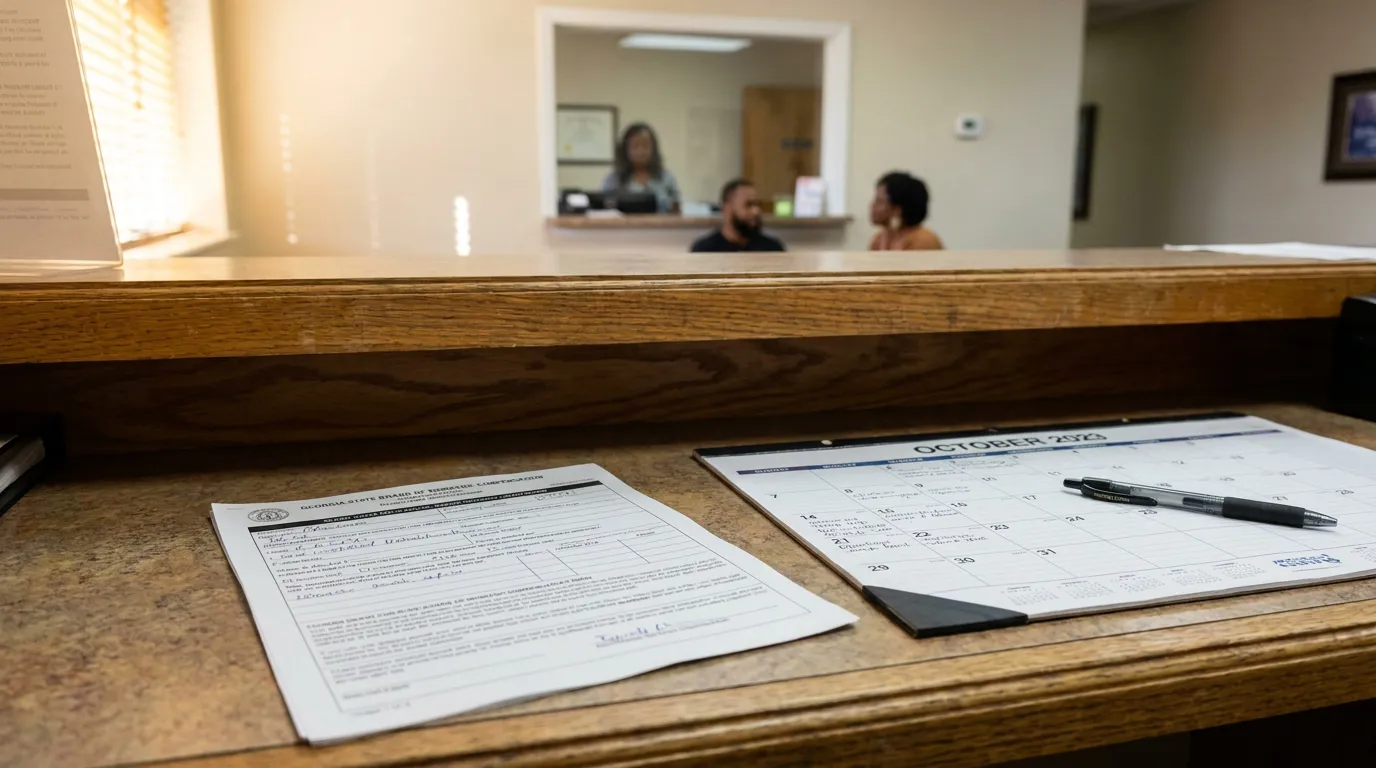
Georgia law sets a firm outer deadline for the first income-benefit payment. Under O.C.G.A. § 34-9-221(a)-(b), the first payment becomes due on the twenty-first day after the employer has knowledge of the injury, and all income benefits then due must be paid that day. Payment may be made in cash, by check, or by electronic funds transfer if both sides agree.
This 21-day window is the backbone of the workers comp timeline in Georgia. The clock starts when the employer gains knowledge of the injury, which is why prompt reporting matters for injured worker pay in Atlanta.
💡 Pro Tip: Report your injury to a supervisor in writing and keep a dated copy. Because the payment deadline runs from when your employer learns of the injury, documented notice helps establish exactly when the workers comp timeline in Georgia began.
The Seven-Day Waiting Period
Wage-loss benefits do not begin on the very first missed day. Georgia imposes a seven-day waiting period before income benefits are payable. You are entitled to weekly income benefits if you are unable to work for more than 7 days. This waiting period is a common source of confusion when workers comp starts in Georgia.
What Happens During a Longer Absence
A prolonged absence can restore that first unpaid week. If your disability keeps you out for more than 21 consecutive days, you will be paid for the first week. Workers with serious injuries generally recover the lost wages Georgia law initially held back during the waiting period.
If I Get Injured at Work Do I Get Paid, and How Much?
Yes, in most compensable cases you are paid, and the amount follows a statutory formula. Eligible workers receive two-thirds of their average weekly wage. The State Board confirms that you will receive two-thirds of your average weekly wage, but not more than $800.00 per week for an accident which occurred on or after July 1, 2023. That statutory cap applies regardless of how high your actual wages were.
Payment depends on the injury arising out of and in the course of employment. Georgia workers compensation payments are designed to replace part of your income, not all of it.
Temporary Total Disability Benefits
Temporary total disability, or TTD, is the benefit most injured workers receive first. Under O.C.G.A. § 34-9-261, a weekly TTD benefit equals two-thirds of the employee’s average weekly wage, but not more than $800.00 per week nor less than $50.00 per week, except that a worker whose average weekly wage was below $50.00 receives an amount equal to that wage. The statute makes this benefit payable for a maximum of 400 weeks from the date of injury, with a longer duration available for catastrophic injuries. You can learn more about how these payments compare in our overview of TTD and PPD benefits.
The table below summarizes the key numbers that shape work injury benefits in Atlanta for accidents on or after July 1, 2023.
| Benefit Feature | Georgia Rule |
|---|---|
| Wage-replacement rate | Two-thirds of average weekly wage |
| Weekly maximum (on/after 7/1/2023) | $800.00 |
| Weekly minimum for TTD | $50.00 (unless wages were lower) |
| First payment deadline | By the 21st day after employer knowledge |
| Waiting period | More than 7 days of disability |
| Maximum TTD duration | Up to 400 weeks (longer if catastrophic) |
💡 Pro Tip: Verify how your average weekly wage was calculated. Overtime, bonuses, and a second job can raise that figure, and an inaccurate wage calculation is a frequent reason workplace injury pay in Georgia comes in lower than it should.
Coverage Begins on Your First Day of Employment
Eligibility does not depend on how long you have worked somewhere. According to the State Board, you are covered from the first day on your job. In Georgia, any business with three or more workers is generally required to carry workers’ compensation insurance. That means a new hire has the same baseline right to work injury benefits in Atlanta as a longtime employee.
This day-one coverage is meaningful for workers in high-risk industries. Whether you drive for a logistics company or work a manufacturing line, coverage attaches immediately.
When Payments Are Late, Reduced, or Disputed
Late benefits can trigger statutory penalties that favor the injured worker. Under O.C.G.A. § 34-9-221(e)-(f), a 15 percent penalty is added to accrued benefits that are payable without an award but not paid when due, and a 20 percent penalty applies when benefits under an award are not paid within 20 days of becoming due.
Benefits can also be adjusted or challenged in certain situations:
- Employer credits: Under O.C.G.A. § 34-9-243(a)-(b), salary, wages, or certain benefits an employer pays during disability may be credited against weekly benefits due, though the credit generally cannot exceed the aggregate weekly benefits owed. Employer-funded disability or wage-continuation plan payments can also reduce the weekly benefit.
- Disputed claims: Under O.C.G.A. § 34-9-221(d), if the employer or insurer contests the claim, it generally must file a notice to controvert with the State Board on or before that same twenty-first day, which can delay or stop payments.
For the precise statutory language on payment timing and penalties, you can review the income benefits payment statute. A notice to controvert does not mean the dispute is valid, and workers can challenge improper denials through the State Board’s administrative process.
💡 Pro Tip: Save every envelope, pay stub, and letter from the insurer. If a payment is late, the postmark and dates help establish whether a 15 percent or 20 percent penalty may apply to your Georgia workers compensation payments.
How to Protect Your Right to Timely Benefits
A few practical steps can make the difference between smooth payments and a stalled claim. Additional guidance is available through the Georgia State Board FAQs.
- Report the injury promptly and in writing, since Georgia generally requires notice within 30 days.
- Follow the treatment plan from an authorized physician and keep copies of all medical records.
- Track your missed workdays carefully to confirm the seven-day and 21-day thresholds.
- Watch your mail closely around the 21-day mark for the first comp check in Georgia.
If you believe your benefits are being underpaid or wrongly denied, a trusted workers compensation Atlanta attorney can review the timeline and the insurer’s calculations for accuracy.
Frequently Asked Questions
-
If I get injured at work do I get paid for the first week I miss?
Not initially, in most cases. Georgia imposes a waiting period, and income benefits generally become payable only after you are unable to work for more than seven days. However, if you miss more than 21 consecutive days, that first week is paid retroactively.
-
When workers comp starts in Georgia, how soon should my first check arrive?
Generally by the 21st day after your employer learns of the injury. Under O.C.G.A. § 34-9-221(a)-(b), the first income-benefit payment is due on the twenty-first day after the employer has knowledge of the injury.
-
How much are TTD benefits in Atlanta?
Two-thirds of your average weekly wage, within statutory limits. Under O.C.G.A. § 34-9-261, TTD benefits are capped at $800.00 per week and set at no less than $50.00 per week (unless the worker’s average weekly wage was lower) for accidents on or after July 1, 2023, and they are payable for up to 400 weeks.
-
What if the insurer pays late or denies my claim?
You may be entitled to penalties, or you may need to contest a denial. Under O.C.G.A. § 34-9-221(e)-(f), late benefits can carry a 15 percent or 20 percent add-on. If the insurer files a notice to controvert, you can challenge that decision through the State Board’s administrative process.
-
Am I covered if I was recently hired?
Yes, coverage generally begins on your first day. Georgia workers’ compensation protection is not tied to length of service, and businesses with three or more workers are generally required to carry coverage.
Getting the Benefits You Are Owed
Understanding Georgia’s payment rules helps you recognize when something has gone wrong. Most eligible workers receive two-thirds of their average weekly wage, subject to the $800.00 cap, with the first payment generally due by the twenty-first day after the employer’s knowledge of the injury and after the seven-day waiting period. Because credits, disputes, and wage calculations can affect the outcome, timely documentation and medical proof remain your strongest safeguards.
📞 If your first comp check is late, short, or missing, The Law Offices of Darwin F. Johnson is ready to review your claim. Call 404-521-2667 today or schedule a consultation online to protect your right to timely benefits.